
Real Estate Bookkeeping Cleanup Trust stays above commission
Steven Palmieri, a Tax CFO and the Entrepreneur's CFO, keeps earnest money and deposits out of commission, sets payday up with the provider you already run, and reads one closed month before the return.
Earnest money and security deposits sit in the trust account. Commission sits in the operating books. If they got mixed, that is the first thing we sort, and it is more common than anyone admits.
What stays apart
- Earnest money stays in the trust account.
- Commission stays in the operating books.
- One closed month sits beside the return.

Which account holds the deposit
 You will be talking to the Steven Palmieri practice.
The Tax CFO way with a trust account
A bookkeeper separates trust from commission and the file is clean. The Tax CFO reads what the clean file says: whether the building is on the right life and the land is off it, whether owner pay should change with the commission year, whether an election makes sense before December. Trust stays above commission. The reading comes after.
Name the next month
The deposit kept its name
The deposit keeps its name even when it sat with operating money.
Click to read the rule ›Tap to read the rule ›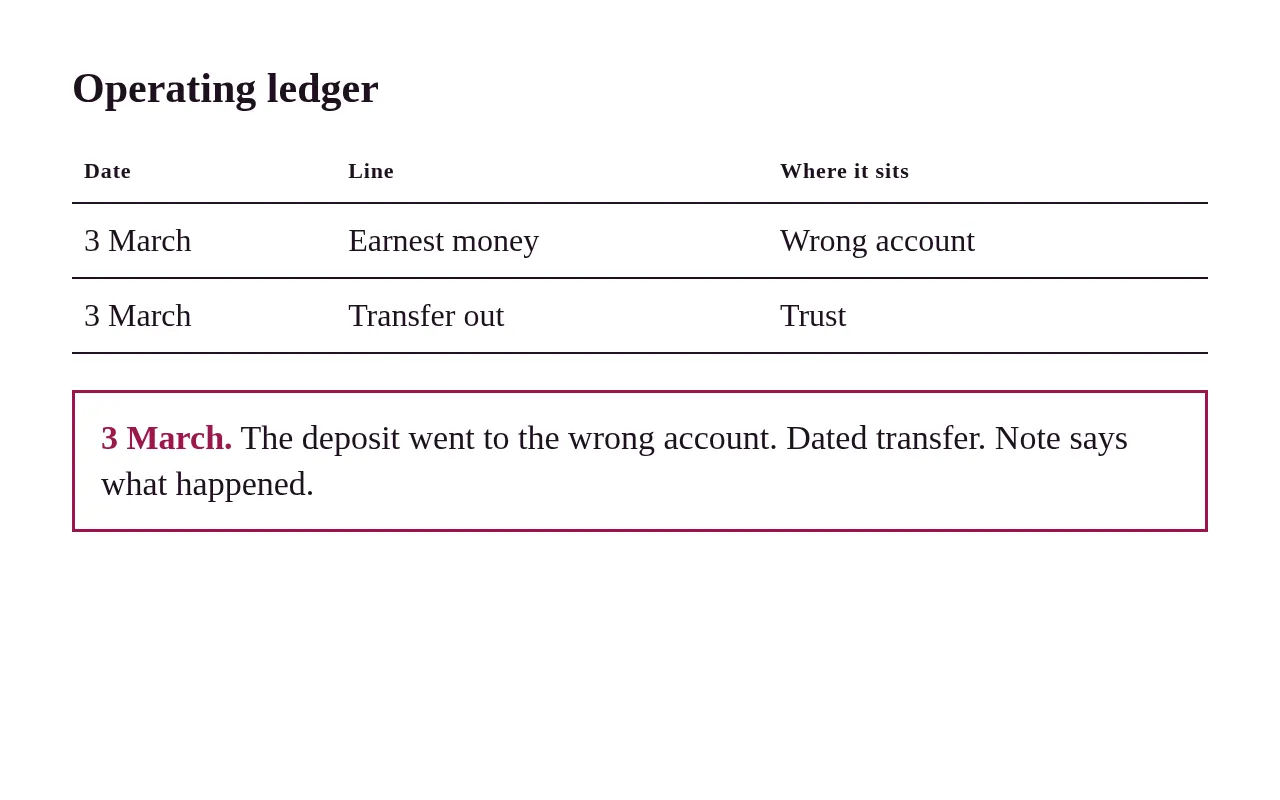
A month the account moved
One month, the deposit went to the wrong account. The fix is not hiding it. It is a dated transfer with a note that says what happened.
Click to see the month ›Tap to see the month ›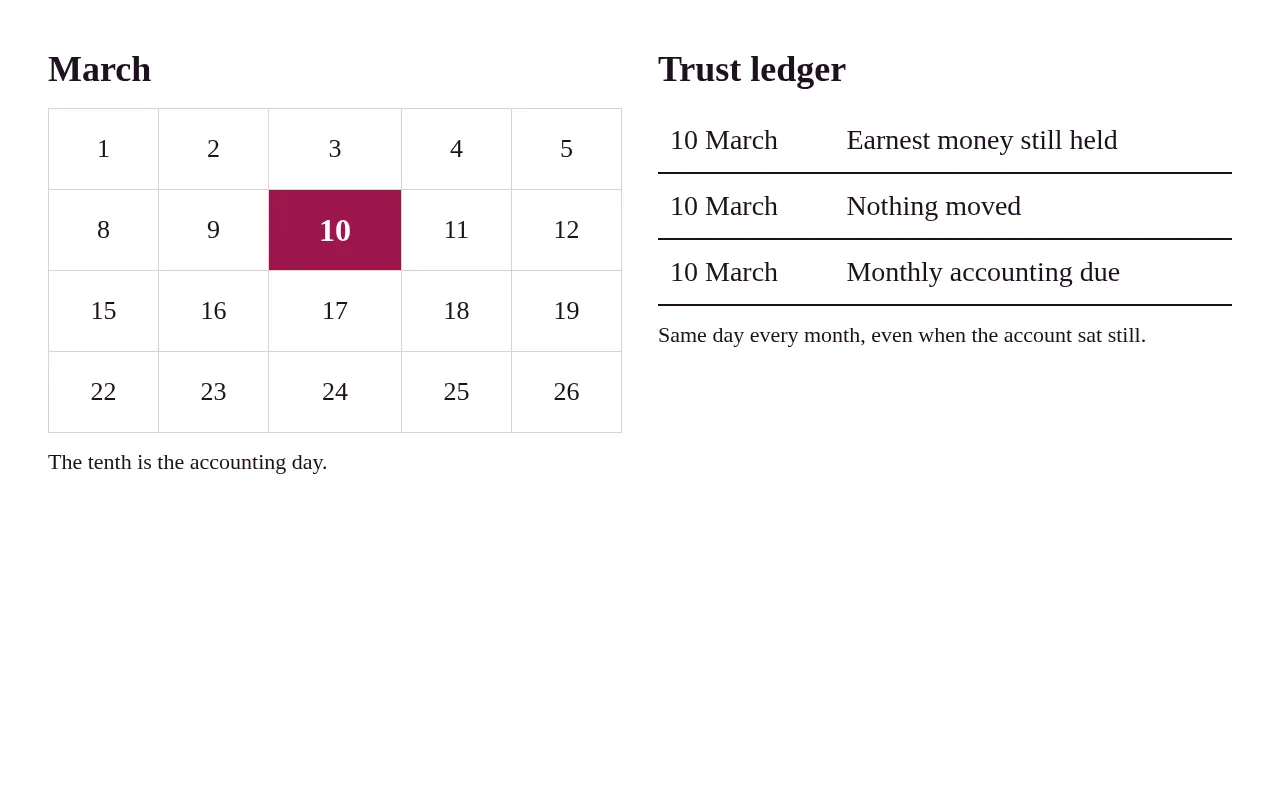
A calendar you can feel
Trust money still owes a monthly accounting even when nothing moved. We produce it on the same day every month.
Click to open the note ›Tap to open the note ›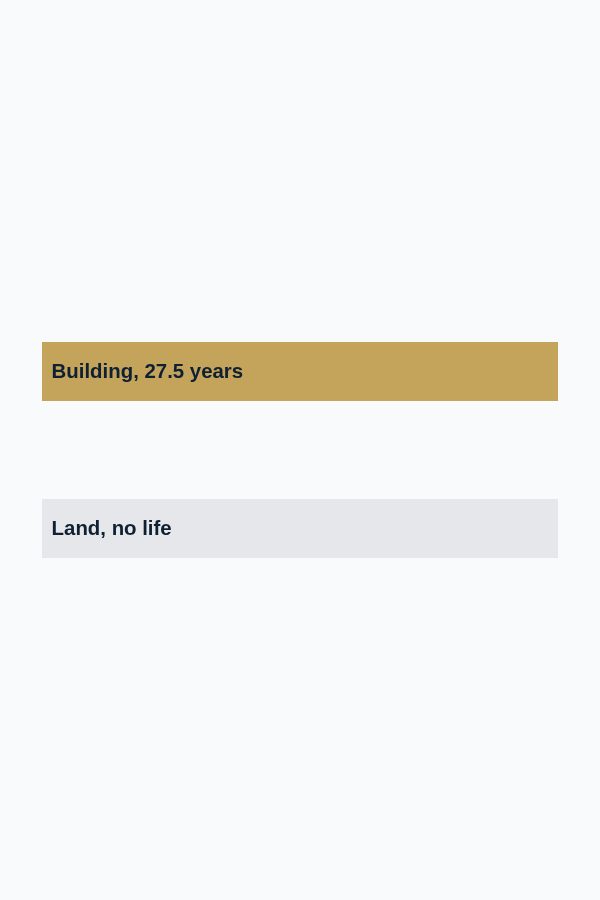
The building, not the land
The 27.5 year life belongs to the building. Land stays out of that life.
Click to see the split ›Tap to see the split ›Two tracks, one week
A commission week and a closing week run on two tracks. We keep the deposit's name on each one.
Click to see the picture ›Tap to see the picture ›Who reads the two totals
A Tax CFO reads the trust total beside the operating month.
Click to meet us ›Tap to meet us ›Six deposits we sort first
Open one card.
1Earnest money posted as income
The deposit is read while the month is still open.
The account it landed in does not change whose money it is. If the contract is still alive, that deposit is still held for someone else.
2Still sitting after it arrived
We ask for the day the check arrived and the day it was deposited.
Those two dates are the test we start with. We do not invent a day count on this card, and a cleanup without the dates is guessing.
3An agent still holding the check
We ask whether you are the broker or the agent.
The license that hangs under a broker cannot hold the client's money in its own account. What the agent is handed goes straight to the sponsoring broker, and the broker is still the one who answers for it.
4A quiet trust account after a closing
We set the monthly accounting beside the operating month.
A month that moved money in the trust account gets a written accounting from the broker. A month that looks quiet still has to be opened, because a blank page is not the same thing as a balance you have proved.
5A stay under 30 days
We ask whether anyone slept there for fewer than 30 days in a row.
A short stay can create a lodging tax that is not the commission. That tax does not belong in the trust total, and it is not the host payout either.
6Land and building on one line
We stop at the closing statement and do not compute a deduction on the page.
The building itself, when people live there as tenants, takes 27.5 years to write off. The dirt under it does not. A hotel-style stay is a different life. The split has to exist before anyone talks about a year of depreciation.
Steven Palmieri, Tax CFO
Steven Palmieri is a Tax CFO and the Entrepreneur's CFO. The work is the trust total beside one closed month.
Where the hour starts
The same close still lands on the day we named, whichever state the brokerage sits in. The hour is a video call. Bring the trust total and the operating month, and if those two do not agree, that disagreement is where the hour starts.
Tell us where the deposit landed
You will be talking to the Steven Palmieri practice.
Money that still belongs to someone else
A deposit has a route from the envelope to the account that holds someone else's money. We can picture a check that stays on that route. These six cards are the places it gets lost.

Holding earnest money, rent, or a security deposit is ordinary work for a broker. The worry that follows is ordinary too. The money looks like it is in the business because it passed through the broker's hands. It is not the broker's income while it is still held for someone else.
The fear usually shows up at the kitchen table, after the office is dark, when a notice or a lender's email asks which account held the deposit. Touching money that was not yours, even by accident, is the feeling we hear first. It is common, and the first sort is which account the deposit used.
Earnest money, rent, a security deposit, a fee you have not earned, and any other money held for another person stay out of the operating books. The account that holds them should say so in the title. Paying the office bills from that account is the mistake the cleanup names out loud. The useful question on a first call is simple. Say which of those you hold.
A cleanup that starts without the account title is guessing at whose money it is. We do not hide the month. We date the transfer and we write what happened, in the month the money moved.
The day it arrived and the day it was deposited
Name the day you received the money and the day it was deposited. Those two dates are the whole test we start with. A cleanup that starts without them is guessing. A cleanup that has them can say whether the money waited in a drawer, moved the same day, or sat with operating money.
The bank title itself should say the money is held for someone else. Separate accounts for earnest money and for security deposits are a choice some brokerages make. They are not a requirement we invent on this page. Bring the two dates. We will not pretend a number we have not opened.
We do not treat a thirty day disbursement sentence as a settled quote. A secondary writeup carried that sentence. This page does not. Once the broker has become entitled to the money, it should not keep sitting with the client's money as if it were still held for someone else. That is a different question from the day the check arrived, and it is asked on its own.
If the check is still in an envelope, say that on the form. The day it arrived is the day we start counting from. The deposit's name does not change because the envelope waited.
An agent does not keep the account
A sales agent cannot keep a trust account. Any trust money the agent receives is delivered immediately to the sponsoring broker. The broker remains accountable. Say whether you are the broker or the agent before anyone designs a cleanup. The records live with the person who is allowed to hold the account.
An agent who is worried has usually done the human thing, which is to hold the check until someone says where it goes. The rule does not give the agent that pause. Immediate delivery to the sponsoring broker is the step. The books should show that delivery, not a private envelope.
The sponsoring broker's name should be the name on the account. An agent's own account is not a substitute, even for a weekend. If the check is still in a drawer, the day it arrived is the day we start from.
A monthly accounting when the account moved
When something moved in that account during the month, write up where the money stood. The paper and the bank file stay with the month. Security deposits held for an owner the broker manages are still someone else's money. They are not operating cash, and they do not become income because the month was busy.
This page does not rename that writeup as a three way package. If last month had activity, say so. A quiet month is still a fact you should say out loud. A blank page is not the same thing as a balance you have proved, and we open the quiet month on purpose.
One closed operating month belongs beside that writeup. The return later has to see the operating number and must not swallow the trust total on the way. Payday, when a brokerage has one, is set up on a provider the owner runs. It is not run here. The same day each month is the rhythm, whether the account moved or sat still.
Commission that has been earned
Once the broker has become entitled to the money, it should leave the account that holds someone else's money. Leaving it there makes that total look larger than the money still held for other people, and it makes the operating books look smaller than the commission already earned. The cleanup names the deposit and moves the question to the right account. It does not invent a day count a regulator did not publish.
Ask whether earned commission is still upstairs. If it is, the monthly accounting and the operating month will disagree, and the disagreement is the work. A fee is not named on this page for that read.
A contract that died
When a contract dies, the deposit stays someone else's money until the buyer and the seller sign a release. Until that release, the money stays on the books as held for someone else. Say whether you are holding a dead contract's deposit. Until the release exists, the deposit is not commission and it is not a fee you have earned.

The picture on the mixed deposit page stops before any entry that would move the money. A dead contract is the same kind of pause. The books can show the deposit, the missing release, and nothing more. We will not write the release for you. A lawyer does that. We will show the books waiting on it.
A stay under 30 days
A stay under 30 days is a different kind of rental from a tenant who lives there. Publication 527 already says a dwelling is not residential rental property when more than half the units are used on a transient basis. That is a federal life question, and it sits on the building page. This note is the bookkeeping question that comes first. Say whether anyone slept there for fewer than 30 days in a row.
The money from a short stay can arrive from a booking platform, from the guest, or from both. A platform may send an information return for the year. The name on that return and the deposits in the bank are two lists that have to meet. We do not guess a total. We ask for the platform statement and the bank line that matches it.
A lodging tax, where a state or a city charges one, is not the commission and it does not belong in the trust total. The tax is its own line. If a platform collected a tax, say so. If you collected it yourself, say that too. We will not fold the tax into commission income to make the month look smooth.
The fear on a short stay is the same fear as on earnest money. Money that is not yours sat in an account that looks like the business. A guest deposit, a cleaning hold, and the host payout are three different events. The books should show three lines, not one deposit called income on the day it landed.
Bring the week the stay happened and the account the payout used. If the payout landed in the operating account and a deposit is still owed back to the guest, the operating month is not ready to close. The reversal belongs in the month the money moved, not in a later month that makes the old one look cleaner. One closed month still sits beside that week.
Which information return
Rent you pay inside a trade or business lands on the 1099-MISC, not on a wage form. A coordinator who is paid as a contractor, rather than through the payday provider, moves to Form 1099-NEC after 2026 payments pass 2,000 dollars. For a payment made before 2026, that line started at 600 dollars. The same IRS page also lists gross proceeds paid to an attorney on Form 1099-MISC, which is the line for a closing payout that is not the attorney's fee.
Count the people. Do not send a guessed total. A cleanup that invents a recipient creates a form you then have to unwind. The names, the amounts, and the form that fits each one are the list we want on the call.
Sources. IRS information returns page, checked 27 September 2026. irs.gov information returns.
The 750 hours, asked as questions
Publication 925 says a taxpayer qualifies as a real estate professional for the year only if both tests are met. More than half of the personal services in all trades or businesses were performed in real property trades or businesses in which the taxpayer materially participated, and the taxpayer performed more than 750 hours of services during the year in those trades. On a joint return the spouse's personal services are not counted toward those two tests. Each rental interest is a separate activity unless the taxpayer elects to treat all interests as one.
The same publication allows up to 25,000 dollars of loss from a rental real estate activity with active participation to offset nonpassive income. Married filing separately and living apart all year is capped at 12,500 dollars. The 25,000 dollar allowance is reduced by 50 percent of modified adjusted gross income over 100,000 dollars, and Publication 527 states the allowance is limited to 50 percent of the difference between 150,000 dollars and that income once the income is over 100,000 dollars. Active participation needs at least a 10 percent interest and real management decisions, such as approving tenants, setting rental terms, or approving repairs.
This page asks which of those facts are true. It does not award the status. Bring an hour log if you have one. Do not invent one. A log written after the year, from memory, is not the record the publication is talking about.
Sources. IRS Publication 925 and Publication 527, checked 27 September 2026. irs.gov/publications/p925. irs.gov/publications/p527.
One closed month beside the trust records
Ask for the operating month and, if the trust account moved, the monthly accounting beside it. One read covers both, so a later return can see the operating number and does not swallow trust. The building life of 27.5 years is a different page. A fee is not named here.
Financial statements and the reconciliations that support them come out of that closed month. They are not a stack of screenshots from a software menu. This site does not teach a software menu. It asks which account held the deposit, and whether the month you want to stand on is actually closed.
The notice that starts the fear is usually one page. A lender wants one clean statement. A platform wants the payout matched to a deposit. The IRS wants the right information return. None of those asks changes whose money the deposit was. We read the operating month beside the trust writeup and we say which lines still belong to someone else. Bring the month you want the return to stand on. Say it plainly when the month you want the return to stand on is still open. A month that is still open can be finished. A month that was called closed with the deposit still inside it has to be named before anyone moves on.