Real Estate Bookkeeping Cleanup For Texas owners
The practice keeps its own books in Dallas and meets Texas owners on a video call. The same close still lands on the day we named, whichever town the brokerage sits in.
Name the Texas accountA Dallas practice, and every other Texas town
If you are reading from outside Dallas and Fort Worth, we are all Texans. The hour is still a video call. We do not keep an office in your town, and we will not describe your street as a place we walked this week. The fear we hear first is the same in every Texas city. Money held for a buyer, a seller, or a tenant was touched, even by accident, because it sat in an account that looks like the business.
Steven Palmieri reads the two totals, and Steven and his team are on the same call. The person who does that read should be easy to point to. We do not claim a real estate license. A complaint and a contract fight are for a lawyer. If a letter from the Commission is already in the file, bring the letter and stop there. We will not draft a response. The accounts can still be read, and the letter goes to the lawyer you choose.
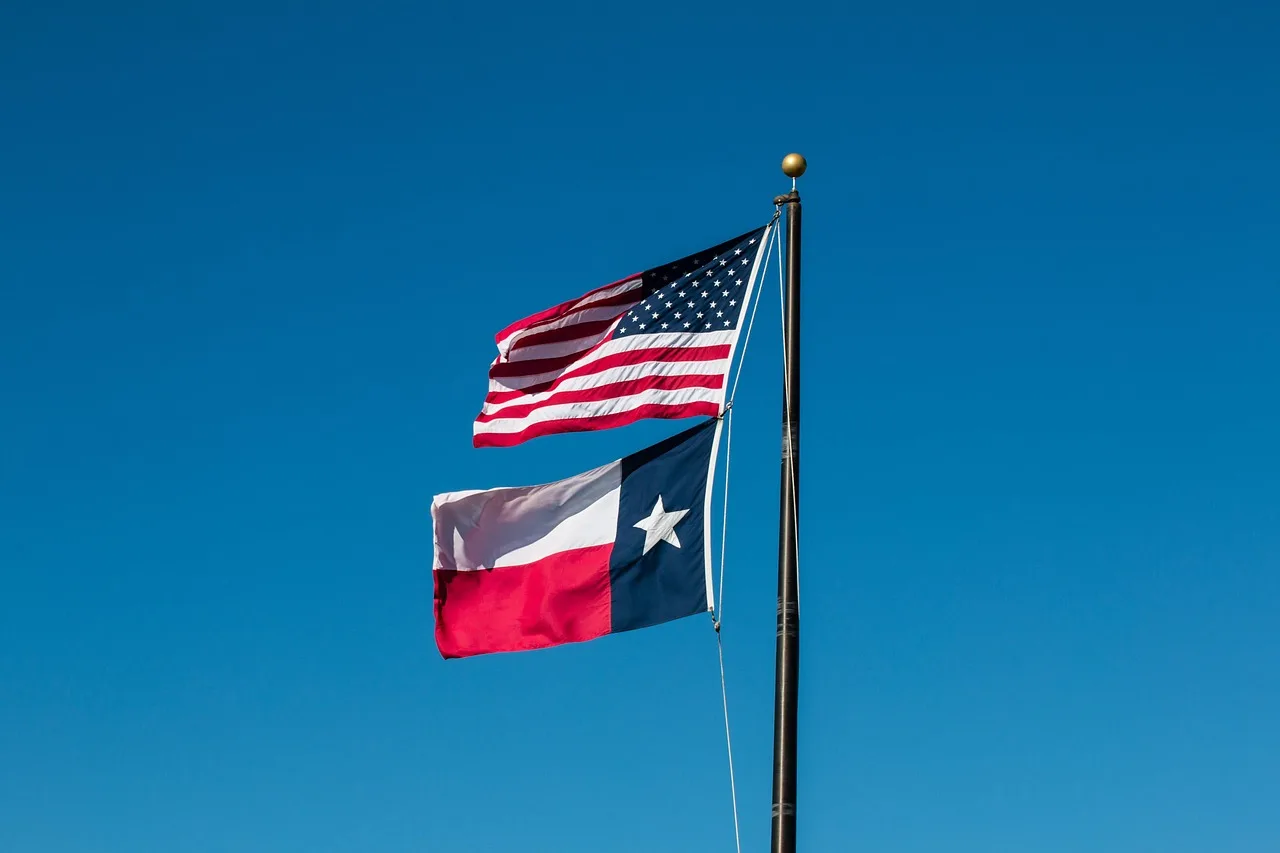
The flags in the photograph are the United States flag and the Texas flag on one pole. The flag photograph at the top of this page is the one Texas picture we kept. Every other page on this address uses a form or a set of keys.
What Texas counts as trust money
Under TREC Rule 535.146, earnest money, rent, security deposits, unearned fees, and any other money held for another person are trust money. The broker holds that money in a fiduciary capacity. It goes into a trust account, or it is delivered to an escrow agent authorized in Texas, as the principals agreed. It is not mixed with personal money. It is not mixed with operating money. Paying operating expenses from the trust account is prima facie evidence of commingling.
The bank title itself should say the money is held in trust. Separate trust accounts for earnest money and for security deposits are allowed. They are not required. A cleanup that starts without the account title is guessing at whose money it is.
Count two working days from the day the check arrived, and stop at the close of business on that second day. By then the money is in the trust account, or it has been handed to an escrow agent who is authorized in Texas. A written agreement of the parties is the only thing that moves that clock. Name the day the money arrived and the day it was deposited. Those two dates are how a Texas brokerage shows it met that rule. We do not invent a day count the rule did not print.
We do not treat a thirty day disbursement sentence as a settled quote. A secondary writeup carried that sentence. This page does not. Once the broker has become entitled to the money, it should leave the account that still holds someone else's money. Leaving it there makes the trust total look larger than the money still held for other people.
Sources. TREC rules, Rule 535.146. trec.texas.gov rules.
The agent, the month, and four years
A sales agent cannot keep a trust account. Any trust money the agent receives is delivered immediately to the sponsoring broker. The broker remains accountable. The records live with the person who is allowed to hold the account. An agent's own account is not a substitute, even for a weekend.
When something moved in the trust account during the month, the broker writes up where the trust money stood. The Commission FAQ cites Rule 535.146(c)(6) for that accounting. The paper and the bank file stay on hand for four years, counted from the day the document arrived or was made. When the brokerage manages a rental for an owner, the security deposit on that rental is still trust money and can live in the property trust account. That deposit is not operating cash.
People ask whether Texas requires a three way name on that monthly accounting. This page does not say that. The rule names a monthly accounting when the trust account had activity, and a four year record. It does not rename that accounting as a three way package. If a lender asks for columns the rule does not name, we will say what the rule already covers and what would have to be added for the lender. We will not pretend the rule used the lender's name.
A contract that died
When a contract dies, a Commission promulgated form lets the broker require the buyer and the seller to agree and sign a release before the earnest money is disbursed. The earnest money FAQ points to Rule 535.146(d). Until that release, the money stays trust money on the books. Say whether you are holding a dead contract's deposit. Until the release exists, the deposit is not commission and it is not a fee you have earned.
We will not write the release. A lawyer does that. The books can show the deposit and the missing release, and nothing more.
Sources. TREC frequently asked questions, and the earnest money FAQ. trec.texas.gov FAQ. earnest money FAQ.
A Texas stay under 30 days
On a taxable stay, the state piece of hotel occupancy tax is six percent of the room. The Comptroller's hotel FAQ says a hotel, for the state tax, is any building where the public rents sleeping accommodations for 15 dollars or more a day. The tax covers hotels, motels, and bed and breakfasts. It also covers condominiums, apartments, and houses rented for fewer than 30 days in a row. A stay of 30 or more days in a row is a permanent resident stay and is not taxed, with the written notice rules on that FAQ. Local hotel tax is collected by the city or the county. The FAQ says local tax generally applies to sleeping rooms of 2 dollars or more a day.
A rental of all or part of a residential property for 29 days or less is a short term rental under the Comptroller's reading of Tax Code Section 156.001(b). Where a booking site has taken on the state hotel tax, that site is the one that collects it and sends it in. If the owner rents on the owner's own site, or on a platform that does not collect, the owner collects and remits the state tax. Local hotel tax is still a separate call to the city and the county. The one percent that comes with filing on time belongs only to the person who actually has to file that report.
The combined state, county, municipal, and venue rates cannot exceed 17 percent. The state piece is the 6 percent. Cities and some counties generally levy local hotel tax at rates up to 7 percent. Venue taxes are generally up to 2 percent. Dallas County is noted up to 3 percent on the venue piece. Local tax is not reported on the state return. A broker's commission is not in the Comptroller's list of taxable services. Publication 96-259 does list multiple listing services as an information service, and 20 percent of an information service charge is exempt. The commission the brokerage charges the client is a different line from the fee the brokerage pays for the listing service. Say whether anyone stayed under 30 days.
Sources. Comptroller hotel FAQ, local hotel overview, and Publication 96-259. comptroller.texas.gov/taxes/hotel/faq.php. local hotel overview. 96-259.
The franchise report beside the trust month
Texas charges a franchise tax for the privilege of a taxable entity that was formed here or that does business here. On this page the entity we mean is the brokerage. Corporations file the report. Limited liability companies file it, including a company with a single member and a series company. S corporations file it. Partnerships file it. Trusts file it. Banks and savings associations are on the same list, and so are professional associations, joint ventures, and other legal entities. Renting houses in your own name, with no company on the deed, leaves this May report off your calendar. Forming a limited liability company with one owner brings the report back. When every partner is a person, and the partnership was never filed as a limited liability partnership, that partnership stays off the franchise report. A brokerage that is already an LLC does not get that exception. Some entities exempt under the tax code, and some passive entities, do not file. Read Publication 98-806 in the same season you file, because the Comptroller's list is the list that governs.
For reports originally due in 2026 and in 2027, the no tax due threshold is 2,650,000 dollars. Retail and wholesale use 0.375 percent. Everyone else uses 0.75 percent. A brokerage is usually on that 0.75 percent line, because a brokerage is not a retail or wholesale seller of goods. Pay that the report lets you subtract cannot go past 480,000 dollars for one person on a 2026 or 2027 report. There is a shorter computation, called EZ, and a brokerage can use it only when total revenue is 20 million dollars or under. The rate on that shorter computation is 0.331 percent. Margin can be total revenue times 70 percent, total revenue minus cost of goods sold, total revenue minus compensation, or total revenue minus 1 million dollars. Bring the brokerage revenue to the report itself if you want a tax figure. The lines above only tell you which rate row a brokerage usually sits on. A brokerage under that 2,650,000 dollar threshold can still have to file. Skipping the report because the tax might be zero is how a May file goes missing.
Put the franchise report on its own day, the fifteenth of May, beside the trust month, and do not fold the two into one deadline. A weekend fifteenth, or a fifteenth that is a holiday, pushes the franchise report to the following day the Comptroller accepts as a business day. The trust month does not move with it. The same May filing also carries the public information report or the ownership information report, whichever one the entity owes, and it rides with the franchise report rather than with the trust month. Ask which of the two the hour is for. The Comptroller franchise page is the page to open with the report.
Sources. Comptroller franchise tax page and Publication 98-806. comptroller.texas.gov/taxes/franchise/. 98-806.
Places Texans already share
Trust money should sit the way the lawn at Klyde Warren Park sits, up above Woodall Rodgers Freeway, and that lawn is open from six in the morning until eleven at night. Texans know a park that sits over a road. The deposit should not fall into the operating lane underneath. The practice sits in Dallas, so this park is one we can name without pretending we walked it for your close.
White Rock Lake is the reservoir formed by damming White Rock Creek on its way to the Trinity, in northeast Dallas. That held water is the picture for a trust account. The money is kept so the operating account does not spend it all at once. A month the account moved still needs a dated note that says what happened.
Ask a Texas broker what happens to a trust deposit during the State Fair of Texas and the answer has to include Fair Park, a run of 24 days, and an opening that is usually the last Friday of September. That fair has come back in every year since 1886, and the gaps people name are the war years and 2020. Every Texan knows that stretch of the calendar. A trust account can still move during those days, and the monthly accounting does not pause while the fair is open. We produce that accounting on the same day every month.
Picture the deposit the way riders picture the M-Line, a streetcar that shows up every day on McKinney Avenue, through Uptown, from the Arts District down to West Village. The streetcar is only a Dallas picture for the route a deposit has to keep. An owner whose brokerage sits in another Texas city still gets that same video call. We are all Texans. A deposit has a route too, from the envelope to the account that holds someone else's money. These are the places that route gets lost.
December is when the oldest marathon in Texas usually leaves downtown, loops the lake at White Rock, and comes back to the same downtown finish. We can all respect a course whose distance does not get renegotiated. A residential rental building has a life of 27.5 years, and land is not entered on that course. The split still has to be on the closing statement before anyone talks about a year of depreciation.
North Oak Cliff keeps a run of shops, restaurants, and galleries around Davis Street and North Bishop Avenue. People call that run Bishop Arts. We can all enjoy a street that refused to give up its name. A deposit refuses too. Sitting in the operating account does not rename earnest money as commission.
Oak Cliff is where the Dallas Streetcar comes off the Houston Street Viaduct, with Bishop Arts farther down that ride. Picture a car that will not share its wire. Commission should keep its own wire, and trust money another. One wire for both is how a deposit goes missing.
Tony Tasset's sculpture Eye is the huge eyeball outside the Joule Hotel. We can all smile at a piece you cannot walk past without noticing. The person who reads the two accounts should be that easy to point to. Steven Palmieri reads them, and Steven and his team are on the same call.
The wholesale halls on Stemmons are the Dallas Market Center, built for buyers, not for a Saturday crowd, and the big market weeks fill them. We can all tell a room that is meant for people who came to do business. The calendar on this site is that kind of room. Bring the two totals. The note can name the kind of deposit. It should not name the house.
Pumpkin Village opens at the Dallas Arboretum and Botanical Garden once the fall dates are posted, and the garden fills with families who came for that patch. We can all picture a season that arrives on a date. The reply arrives before the next working morning, which is its own season. An older photograph on the thanks page was a shaded walk, and it was not the garden. The garden stays in this sentence. The flags at the top of this page are the picture that belongs here.
Which Texas account needs a read
 You will be talking to the Steven Palmieri practice.