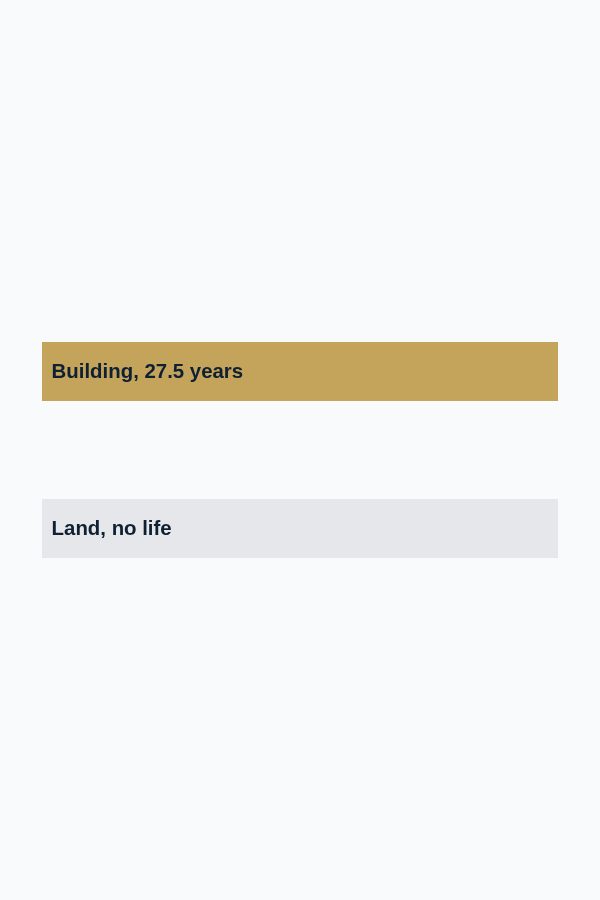
Real Estate Bookkeeping Cleanup Land stays out of the life
The life applies to the building. A deduction is not calculated on this page.
Name the splitStraight line, mid month, land left out
Publication 527 says residential rental buildings and structural components are depreciated on a straight line over 27.5 years under the general depreciation system, using a mid month convention. Land is not depreciated. The publication's example splits a purchase price between building and land and depreciates only the building. A dwelling is not residential rental property under that publication when it is a hotel, motel, or inn, or another place where more than half the units are used on a transient basis.
Say whether you have a closing statement that splits land and building. This page stops at that question. It does not run the deduction. A number computed from a blended price would put land on a life the publication refuses to give it, and it would put a hotel-style building on a life meant for a place people live.
The closing statement usually lands on the kitchen table the night the keys change hands, when the office is dark and the price is still one blended number. The fear in that hour is that someone already wrote off ground that cannot be written off, or wrote a short stay down as if people lived there. We sit with that page before anyone computes a year. A residential rental building has a life of 27.5 years, and land is left off that life. Bring the statement that splits them. If the statement does not split them, say that. A blended price stays a blended price until the closing statement itself splits land from building. We will not supply a percent the statement does not show.
Sources. IRS Publication 527, checked 27 September 2026. irs.gov/publications/p527.
What the split is for
A Tax CFO can read the closing statement beside the return without awarding a number on this page. The building, the land, and the return belong in one conversation. The height of the work is naming the split before anyone computes a year of depreciation.
If a closing statement is in the file, bring that statement. One price and no split is itself the fact to name. Do not invent a land percent on the way to the call.
Reconciliations of the fixed asset list to that statement are part of a closed month. They are not a software tour. If the list still shows one combined line, the month is not ready for a depreciation conversation.
A mid month convention means the first month and the last month are not full months in the way a calendar page looks. Publication 527 already does that math. This page does not repeat it as a number for your building. If the property was placed in service on a day you can point to, say that day. If the day is missing, the life cannot start.
Owners sometimes want a land percent before the statement is in the room. We will not pick one. The appraisal and the closing statement can disagree, and the disagreement is the fact we read. Bring both if you have them. Leave the deduction for the return, after the split is named.
What the closing statement shows
 You will be talking to the Steven Palmieri practice.